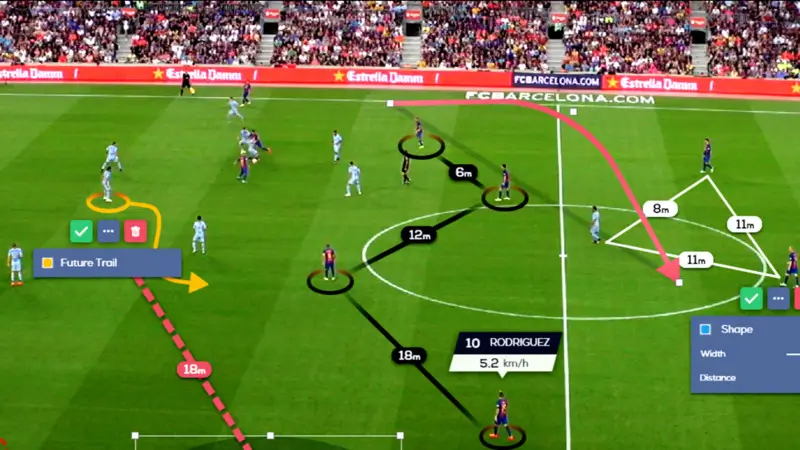

Football has never had more data than it does today. Every pass, sprint, shot, tackle, and touch can be measured, categorized, and compared against thousands of previous events.
Clubs invest millions in analytics departments, broadcasters fill screens with advanced metrics, and betting platforms use sophisticated models to estimate probabilities before every match. Yet football remains stubbornly resistant to complete mathematical explanation.
Somewhere between spreadsheets and scoreboards, something unpredictable still survives. Even platforms such as RajBet casino rely heavily on statistical models, but anyone who has followed the sport long enough knows that numbers often describe football better than they predict it.
Modern football analytics is built around the belief that large datasets reveal underlying truth. Metrics such as Expected Goals (xG), possession value, pressing intensity, and expected assists help separate performance from luck. They are incredibly useful. The problem begins when people assume they explain everything.
Perhaps the greatest example remains Leicester City's Premier League title victory in 2015–16. Before the season started, bookmakers offered odds of 5000-1.
Even advanced models struggled to justify their rise. Leicester scored significantly more goals than their xG suggested and consistently converted difficult opportunities at rates that appeared unsustainable.
Yet the season happened anyway. Analysts could explain parts of it afterward, but very few predicted it beforehand. Research on Leicester's title run continues to identify it as one of football's greatest statistical anomalies.
Reasons Football Escapes Pure Statistical Models:
- Confidence can change player decision-making within minutes.
- Team chemistry remains difficult to quantify accurately.
- Leadership affects performance without appearing on stat sheets.
- Referee decisions create major swings that models cannot anticipate.
- Injuries during matches instantly alter tactical structures.
- Crowd pressure influences both players and officials.
- Individual brilliance can outperform historical probabilities.
- Tactical surprises often invalidate pre-match expectations.
- Momentum affects behavior despite being difficult to measure.
- Small sample sizes create misleading conclusions.