
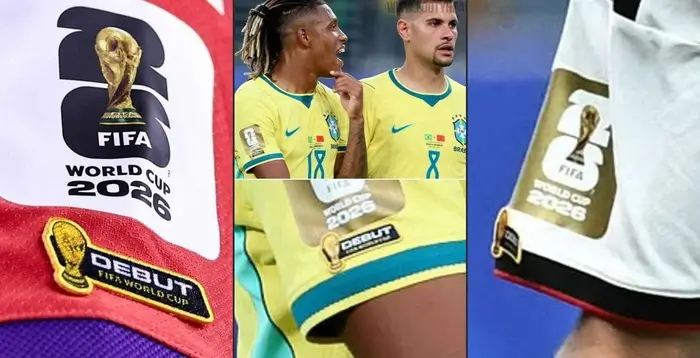
A new detail has appeared on shirts at the 2026 World Cup, and it has nothing to do with sponsors or squad numbers. Some players are taking to the pitch with a small extra badge stitched onto their jersey, and plenty of fans have been left wondering what it means.
It is one of several new features at a tournament that already looks different to any before it, with the field expanded to 48 teams and three nations sharing hosting duties. Fans following the action through a betting exchange like BETDAQ or watching at home have been quick to spot the change.
In this article, we explain what the debut badge is and why players have started wearing it.
What the debut badge is
The badge is a small patch worn by any player making their first appearance at a World Cup finals. It marks that maiden outing and is worn during the debut match itself rather than across the whole tournament.
Once the game finishes, the patch is taken off the shirt. It is designed as a one-off marker for the occasion, not a permanent addition to the kit. The same rule applies to everyone, so a novice and a seasoned international receive the badge on exactly the same terms, as long as it is their first World Cup appearance.
Why the badges are being used
The patch is tied to a licensing arrangement between FIFA and the trading card company Fanatics. According to DAZN, each debut badge is removed after the match and preserved so the match-worn material can be used in future trading card sets.
That deal does not formally begin until after the 2030 World Cup, with Panini still the current card partner. The badges worn in 2026 are being saved now, ready for when the new agreement takes over. A moment on the pitch this summer is effectively being stored up for a product that will not arrive for years.
Where the idea comes from
Match-worn patches are already common across American sports, where collectors place a high value on anything used in a specific game. With the bulk of the 2026 World Cup taking place in the United States, the idea sits comfortably alongside that culture.
This is the first time it has been applied at a World Cup. It turns a player's first appearance into something collectors can own, while still marking a personal milestone for the player involved.
Which players are wearing it
Any debutant qualifies, so the badge covers emerging talents and established names who have not featured at a World Cup before.
Lamine Yamal is among the most high-profile, wearing one for Spain after breaking through since the last tournament. Erling Haaland does the same for Norway, who have reached a World Cup for the first time since 1998, making it the striker's debut despite his standing in the game. Michael Olise is another in line to feature with the patch for France.