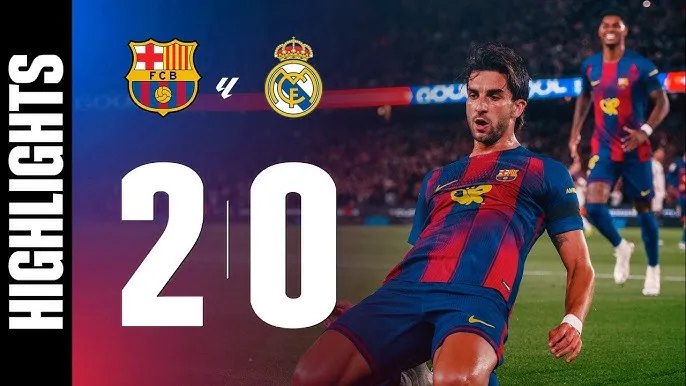

The world is filled with millions of football fans. Some support one team, while others support another, but the fact of the matter is that football is the world's most popular sport overall, with the majority of all competitions drawing larger audiences than any other. From the FIFA World Cup to national championships and top-tier club competitions, such tournaments dictate the plans of millions of people during weekends and even some weeknights. It is also not a coincidence that certain tournaments attract millions of people, as the increased audience automatically brings higher interest in supporting the teams competing and watching the action live.
The FIFA World Cup Is Still Unbeaten
There is no tournament that can be compared to the FIFA World Cup in terms of reach. It takes place every four years, which makes it quite rare, keeping everyone excited about it. The last few World Cups have broken previous records for viewers, with total television and online audiences for the final exceeding one billion people. The finals in 2026 between Spain and Argentina gathered nearly 63 million American viewers watching the game in English or Spanish. Early estimates indicate that the Asian audience was over 100 million just from Asia alone. Those numbers explain why national broadcasters see the FIFA World Cup as their main commercial opportunity for the next ten years.
As for the reasons behind the success of the tournament, there are a few of them. First of all, the structure of the World Cup allows viewers from different groups to become interested. Group stages give plenty of opportunities for casual viewers to become involved in the tournament, and the knockout stages create excitement that comes to an end in one final match. This emotional aspect of the FIFA World Cup explains why millions of fans use the MelBet platform when the real title contenders are revealed in the group stage. Contrary to domestic leagues, the World Cup pits countries against each other, providing a great sense of collective identity for millions of people who would not normally watch football.
Moreover, the hosting countries enjoy an increase in audience due to broadcasting companies building their programs according to the schedule of matches, as well as public spaces screening those games for people who are unable to buy a ticket. However, this effect does not only apply to the country hosting the tournament. Nearby regions are also affected by that because people from similar regions with similar time zones or cultures are more inclined to follow the tournament than any World Cup taking place in another part of the world.
Continental Championships Have Very Large Regional Audiences
Despite the World Cup having global appeal, the majority of large audiences belong to continental tournaments, such as the UEFA European Championship, the Copa América, and the Africa Cup of Nations. Moreover, the Euros have already become a serious competitor for the World Cup in Europe, with several final matches gathering over 300 million people throughout the world. Registration ahead of the competition allows fans with a MelBet login to check the fixture list and the lineup of the match before it even starts. Such tournaments have advantages like shorter distances for fans, familiarity with rival countries, as well as a short schedule, keeping the attention of fans for one month.
Such efficiency becomes important when there are multiple games that take place on one and the same day and fans need an easy way to get relevant data fast. In continental competitions, it is even more likely for such a preparation to pay off since knockouts will change unexpectedly after the first rounds are played out.
Club Competitions Are Closing the Gap
For decades, international tournaments had an obvious edge over club football when it comes to audience size, yet things have changed. The UEFA Champions League Final now regularly features an audience comparable to that of a small international tournament due to the presence of globally recognizable clubs and football stars that appear in this competition every year, as opposed to every second or fourth one. The expanded FIFA Club World Cup is another example of an audience-drawing event, with the latest edition claiming to have been viewed by 2.7 billion people around the world, according to figures supplied by FIFA with the help of Nielsen Sports.
Below is a comparison of the estimated global audiences of the football tournaments mentioned above based on their most recent editions.
Tournament | Estimated Global Audience (Recent Edition) | Frequency |
FIFA World Cup Final | Over 1 billion viewers | Every 4 years |
FIFA Club World Cup (all matches) | Around 2.7 billion viewers combined | Annual (new format) |
UEFA European Championship Final | Around 300 million viewers | Every 4 years |
UEFA Champions League Final | Around 400 million viewers | Annual |
Copa América Final | Around 200 million viewers | Every 4 years |
Figures may vary slightly depending on the source and estimation technique, but the general trend holds regardless of the report. Club competitions have become capable of drawing an audience that used to watch only international tournaments due to the fact that the rosters of the leading teams feature the same star players.
Why Audience Size Keeps Growing
Several reasons contribute to the constant growth of the audience of football tournaments rather than the stabilization of its size. Streaming services provide access to matches in countries where broadcasting rights were not available, and social media snippets make sure that the reach of the tournament exceeds the number of people who watch the entire game. Betting and second-screen applications influence viewing habits since nowadays fans watch odds, statistics, and comments together with the broadcast as opposed to watching passively.
Mobile viewing is another factor here as well. Fans who used to require TV sets to keep up with the score and other important information can now do it from anywhere, thanks to a mobile application, thus allowing the tournament to increase its reach by extending it to moments when it was impossible before, such as traveling and work breaks.
This trend of increased engagement with tournaments through mobile applications has affected the distribution of rights in the way that digital access has become equally valuable to traditional TV broadcasting, as broadcasters try to keep up with this rapid development in the way viewers consume sports content. It should be noted that most of the recent growth in the audience of tournaments came precisely from digital views.
Rivalries are another thing that keeps the audience of tournaments engaged. Rivalries between historic opponents and clubs give rise to expectations months in advance, which are amplified by media coverage through previews, player interviews, and historical retrospectives. Especially younger audiences like that kind of narrative, thus making the audience of football tournaments increasingly international and multigenerational compared to a decade ago.
Global Football Calendar Keeps Fans Engaged Year-Round
The major advantage of football as a spectator sport is that its major tournaments never take place at the same time, allowing it to keep fans engaged all year round. A quiet period domestically is followed by a continental championship or World Cup qualifying match, thus maintaining the engagement at a steady rate rather than concentrating it to one peak. Media and digital companies have found ways to adapt their strategy to such a rhythm, creating separate approaches to cover every individual tournament. Due to such a rhythm and the unique worldwide reach of football, tournaments are likely to retain their dominant position in the worldwide audience list for several years to come. With the rapid development of mobile and digital engagement continuing to outpace the number of traditional broadcasts.