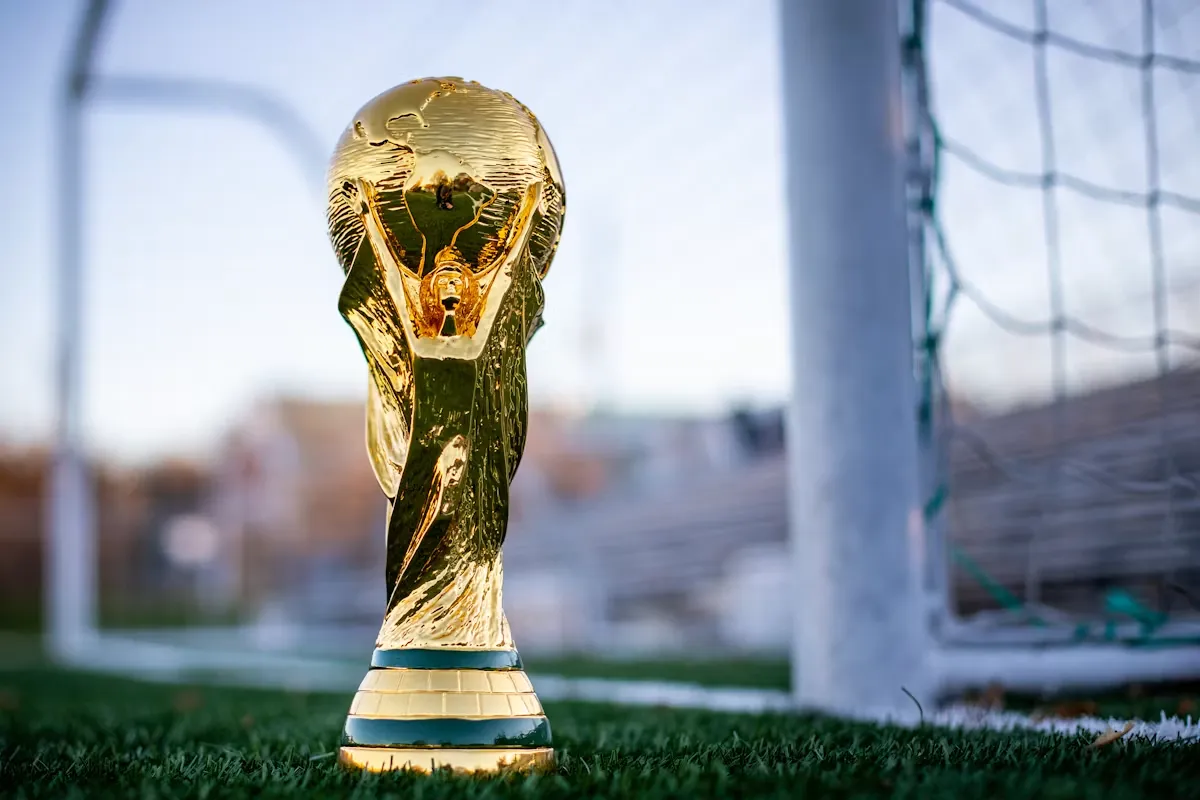
The knockout stage always changes the complexion of the Golden Boot race. Group-stage scoring records create the early leaderboard, but every elimination match brings fresh opportunities for players to separate themselves. A single brace can move someone from chasing the leaders to sitting alone at the top.
As the tournament progresses, the race has become tighter rather than clearer. Kylian Mbappé currently leads the standings, but Lionel Messi is nipping at his heels, while Erling Haaland, Ousmane Dembélé, and Vinícius Júnior remain close enough to challenge if their countries continue advancing.
Mbappé enters the knockout stage as the player everyone else is trying to catch. His two-goal performance against Sweden pushed him to six goals from four matches and reinforced why France continues to rely on him whenever they need a decisive attacking moment. His acceleration, movement behind defenders, and composure in front of goal have consistently separated him from the rest of the field.
His scoring record has also come against different styles of opposition. Whether facing teams that defend deep or those willing to press higher up the pitch, Mbappé has repeatedly found ways to exploit space. France's ability to create transition opportunities continues to suit his game perfectly.
That form has naturally strengthened interest in the World Cup 2026 top scorer odds, where Mbappé remains one of the leading favourites. Even so, his advantage is slimmer than it first appears, as several direct rivals still have an extra knockout fixture to play.
The biggest challenge for Mbappé is maintaining his lead as the competition becomes more tactical. Opponents are increasingly building defensive plans specifically to contain him, meaning every goal from this point forward is likely to require even greater patience and precision.
Few players understand tournament football better than Messi. Despite playing only three matches, he has already matched Mbappé's six-goal tally, producing a hat-trick against Algeria, a brace against Austria, and another goal from the bench against Jordan.
His position is particularly interesting because Argentina's Round of 32 match against Cape Verde still lies ahead. That gives him an immediate opportunity to move ahead of the French forward before France returns to action, making the Golden Boot race far more balanced than the current standings alone suggest.
Messi also benefits from his role within Argentina's attack. Most dangerous moves still flow through him, whether he is finishing attacks himself or arriving late around the penalty area. Penalties and direct free kicks further increase his chances of adding to his total.
Experience may ultimately prove his greatest advantage. Knockout football often rewards calm decision-making over constant attacking pressure, and few players manage big moments better than Messi.
Haaland has quietly built one of the tournament's strongest scoring campaigns. Five goals have kept Norway moving through the competition, including the late winner against the Ivory Coast that secured their place in the next round.
Unlike some of the other contenders, Haaland rarely depends on sustained possession. Norway often attacks directly, looking to create one decisive chance rather than long spells of pressure. That approach suits his physical presence inside the penalty area, where he needs very little room to finish.
His performances have also demonstrated an ability to score when the pressure is highest. Important goals carry extra significance during knockout football because they often determine whether a team continues playing or heads home.
If Norway continues progressing, Haaland could quickly erase the small gap separating him from the leaders. One productive evening is all it would take to completely reshape the standings.
Dembélé's tournament has developed slightly under the radar because so much attention naturally follows Mbappé. Yet his four goals have made him one of the competition's most effective attacking players and an increasingly realistic Golden Boot contender.
One reason for that success is the attention defenders devote to Mbappé. Opposing back lines frequently shift toward France's leading scorer, creating additional space for Dembélé to attack from wider positions or arrive late into dangerous areas.
His movement has been every bit as important as his finishing. Rather than remaining fixed on one side of the pitch, Dembélé constantly changes positions, making him difficult to track across ninety minutes.
France's continued progress also works in his favour. More matches naturally create more scoring opportunities, and Dembélé has shown he doesn’t need a large number of chances to make a decisive contribution.
Vinícius Júnior continues to grow into one of international football's most dangerous attacking players. His four-goal return reflects not only his finishing but also his willingness to attack defenders repeatedly throughout a match.
Brazil's style allows him to play with freedom. Quick passing combinations and overlapping full-backs regularly isolate defenders in one-on-one situations, where his pace and close control become extremely difficult to stop.
Another strength is his ability to score in bursts. Rather than collecting isolated goals across several matches, Vinícius has shown he can produce multiple decisive moments within a single game, making him particularly dangerous as the tournament progresses.
If Brazil reaches the latter stages, he could emerge as one of the race's biggest surprises. He currently trails the leaders, but his attacking role means he remains well-positioned to close the gap quickly.
Current goal totals tell only part of the story. As the knockout rounds continue, progression becomes almost as important as finishing ability because every additional match offers another chance to score.
Players who take penalties naturally gain an advantage, while those leading attacks built around quick transitions often receive more clear-cut opportunities than forwards operating in slower possession systems. Tactical roles will matter just as much as individual form.
Extra time could also become a decisive factor. Knockout matches frequently extend beyond ninety minutes, creating valuable additional minutes that can influence the final standings. A player whose team repeatedly survives close contests may simply have more opportunities to score than someone whose nation wins comfortably or exits early.
For that reason, the Golden Boot remains one of the tournament's most unpredictable races. The current leaderboard provides a snapshot rather than a final picture, and one outstanding knockout performance could completely transform the standings before the semi-finals arrive.
The race for the Golden Boot has already produced outstanding individual performances, but the decisive moments are still ahead. Mbappé may currently lead, yet Messi, Haaland, Dembélé, and Vinícius all remain close enough to change the story over the coming rounds.
With every knockout match carrying greater pressure and greater reward, the competition's leading scorer is unlikely to be decided until the very end. That uncertainty is exactly what makes the Golden Boot race one of the most compelling stories of the 2026 FIFA World Cup.