Sir Alex Ferguson won 13 Premier League titles across two decades at Manchester United, a total that still sits eight clear of any other club in the competition's history. It remains the most dominant individual managerial reign the English top flight has ever seen. Anyone checking Manchester United betting odds for this weekend's fixture is watching a club still measured against the standard Ferguson set during his reign at Old Trafford.
Ferguson's success was built patiently over years rather than delivered overnight, and understanding how that dominance came together explains a great deal about why United's more recent struggles have felt so unfamiliar to a generation of supporters raised on near constant success.
Ending a 26-year wait
Ferguson arrived at Old Trafford in November 1986 and spent several difficult seasons rebuilding the club before winning the inaugural Premier League title in 1992-93, ending a 26-year wait for the league championship.
That first title set the pattern for what followed, with United going on to win the double of league and FA Cup the very next season, establishing the platform for sustained success rather than a single isolated triumph.
The Class of '92
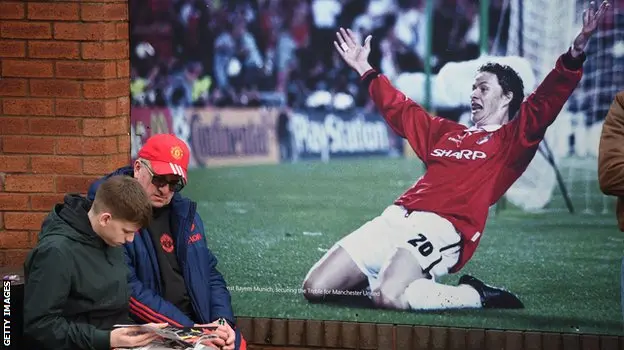
Much of United's success was built on academy graduates developed under youth coach Eric Harrison, whose group became known as the Class of '92. Ryan Giggs, David Beckham, Paul Scholes, Nicky Butt and brothers Gary and Phil Neville all broke into the first team around the same period, forming the spine of the side that won the historic Treble of the league, FA Cup and Champions League in 1998-99, the first time an English club had achieved that combination, until local rivals Manchester City did the same in the 2022-23 season.
For those tracking Premier League title odds each season, that emphasis on developing talent internally rather than relying solely on transfers remains a rare model for sustained title contention.
Key players across two decades
Eric Cantona's arrival in 1992 gave United the spark that ignited their first title win, his flair and self-belief rubbing off on the young squad forming around him. The Class of '92 carried that momentum through the mid to late 1990s, while Roy Keane provided the leadership and drive in midfield throughout much of the 2000s.